When a cop or firefighter retires all of his or her friends generally get together and hold what is called, in the vernacular, a racket, a kind of testimonial and going away roast. It looks like there will be one held in honor of our selfless deputy mayor Dan Doctoroff.
On September 20th a few of Dan's good buddies from the neighborhood will be holding a breakfast in his honor. It was unsurprising, however, to discover (Thanks to the Crain's Insider), that the festivities will be sponsored by Steve Ross of the Related Companies and Jay Cross of the Jets. (Memo to the Conflicts of Interest Board: ongoing association, get it?).
Ostensibly the event is to honor Dan's efforts on behalf of NYC2012. In reality the debt of gratitude owed by Ross to Doctoroff can't be repaid with any measly scrambled eggs breakfast. Our bet here is that the ongoing Ross-Doctoroff affair will continue profitably for many years to come. Maybe the COIB will find a conflict here posthumously.
Thursday, September 08, 2005
Community Board Hearing on the BTM
Last night’s joint committee meeting of Community Board 4 was an interesting affair, packed with neighborhood residents, representatives of various elected officials, and a large group of construction workers who boisterously supported Related’s plan to redevelop the Bronx Terminal Market.
Besides these workers, who obviously are interested in obtaining construction jobs, there was quite a bit of skepticism about the developer’s Gateway Mall project at the BTM. Despite the community concerns, the committees approved the project which means that they recommend its approval when the full board meets on Wednesday. The reasons for this poor decision merit a whole other post but for now we’d prefer to discuss what happened before the board members voted.
First, Jesse Masyr, Related’s land use counsel presented the audience with a snazzy 3-D animation which shows what the Gateway Mall will look like. Though technically impressive, the clip actually raises some questions about the project including whether a box-store laden waterfront is really a beautification of the area. Also interesting was Masyr’s response to an audience member who, upon seeing the animated cars whizzing down the Major Deegan, said: “That’s not the Deegan; it’s moving!” Masyr’s joking but revealing response: “It’s must be the early morning.”
After his presentation, community members questioned the land-use counsel about the plan’s potential impact on traffic and asthma, its lack of community inclusion, whether non-union box stores will be present on site and the type of jobs the project will create. In general Masyr, gave inadequate responses that sidestepped the inquiry or misrepresented the true impacts of the project. Here are some of his most audacious claims and our responses:
Masyr: The project is surrounded by over 1 million people and, because of its pedestrian-friendly design, a great number of these people will either walk to the mall or take public transportation
Besides these workers, who obviously are interested in obtaining construction jobs, there was quite a bit of skepticism about the developer’s Gateway Mall project at the BTM. Despite the community concerns, the committees approved the project which means that they recommend its approval when the full board meets on Wednesday. The reasons for this poor decision merit a whole other post but for now we’d prefer to discuss what happened before the board members voted.
First, Jesse Masyr, Related’s land use counsel presented the audience with a snazzy 3-D animation which shows what the Gateway Mall will look like. Though technically impressive, the clip actually raises some questions about the project including whether a box-store laden waterfront is really a beautification of the area. Also interesting was Masyr’s response to an audience member who, upon seeing the animated cars whizzing down the Major Deegan, said: “That’s not the Deegan; it’s moving!” Masyr’s joking but revealing response: “It’s must be the early morning.”
After his presentation, community members questioned the land-use counsel about the plan’s potential impact on traffic and asthma, its lack of community inclusion, whether non-union box stores will be present on site and the type of jobs the project will create. In general Masyr, gave inadequate responses that sidestepped the inquiry or misrepresented the true impacts of the project. Here are some of his most audacious claims and our responses:
Masyr: The project is surrounded by over 1 million people and, because of its pedestrian-friendly design, a great number of these people will either walk to the mall or take public transportation
The developer’s EIS predicts that 41% of the mall’s patrons will not travel by car, a claim that is extremely bold and extremely unfounded. Masyr never explained why, besides having pretty streetscapes and being in a city, this Gateway project would not be car-dependent. Did Related interview people within the project’s radius and find that many people would be willing to walk to the redeveloped terminal market? Did they base their findings on similar urban malls where, in fact, there is a high level of walking and public transportation use? The answer to both questions is no; assumptions are made but no evidence is offered to back them up.Masyr: The Related Companies are serious about crafting a community benefits agreement (CBA).
A closer look at the EIS also shows Maysr's claim to be ridiculous. According to that document, the Gateway Mall, “would house approximately five large-scale retail stores totaling 755,990 gross square feet…” These stores may include a hardware store, a wholesale club and a department store. So Related wants us to believe that people shopping at BJ’s or Sam’s Club (part of Wal-Mart) are going to walk or take a bus to buy 30 pound boxes of detergent or other bulk items. Do they want us to believe that people from Manhattan are going to walk over the Macombs Dam Bridge with their lumber purchases from a Home Depot? In essence, it is totally inconceivable that only 60% of the people shopping at a box store-anchored mall will use cars. This means that Realted’s traffic estimates are totally off, something we have pointed out previously.
The Related Companies are definitely not serious about creating a real CBA as is evidenced by both the process they have engaged in and the benefits they have been offering.Maysr: Traffic, and the related problem of asthma, will not be a problem because we will be making a number of improvements including widening the 149th st. exit ramp on the Deegan and enhancing sidewalks.
First, a Community Benefits Agreement involves negotiations with a broad spectrum of community-based organizations and Related has not reached out to a single South Bronx housing, environmental, senior, or neighborhood group. The only people the developer have talked to so far are members of BOEDC and the Bronx Borough President’s Office.
Second, CBAs deal with much more than jobs. While the developer’s desire to provide minority and women Bronxites with construction work is admirable, this benefit is only one of many that existing agreements guarantee. Real CBAs deal with mitigating environmental impacts, promoting small business, providing/guaranteeing affordable housing, assisting the education of neighborhood children and much more. Related’s notion of a CBA falls way short.
Third, and perhaps most important, is the fact that legally-binding benefits agreements are negotiated prior to land use review, not during it. The purpose of a CBA is to ensure that a community gets maximum concessions from a developer, especially if the project has potential negative impacts. Now that Related has had its project certified, and the plan is gaining momentum, it has much less incentive to incorporate community demands. Furthermore, because the project has gained approval from City Planning, the developer cannot make significant changes to the designs (e.g. adding affordable housing) without withdrawing and resubmitting its application. Related is not about to do this which means that it is definitely not going to listen to any demands that require altering the project.
Maysr’s claim is very similar to those that Wal-Mart makes all over the country: an extra 100,000 – 200,000 cars can be easily accommodated by minor infrastructure improvements. Before deconstructing this claim it is important to realize that “enhancements” to the Major Deegan may end up being funded by the city or the state. We are unsure at this point who is exactly would pay for ramp improvements but there is no guarantee it will be Related. Therefore, the taxpayer may very well end up subsidizing an exit ramp widening that was only made necessary because of a private development. This is in addition to the subsidies Related is being offered..
But the bigger question is whether, because of these upgrades, the project will have “no significant impact,” as Maysr claimed on Bronx 12, on traffic and asthma. According to the high readings on our bogus meter, it seems Related’s assertion is patently false. Let’s use common sense here: does anyone really think that the impact of an additional 250,000 cars a week will be mitigated by the widening of the 149th street exit ramp? And how does this supposedly more efficient egress point lessen the considerable increase in emissions being released into the South Bronx’s air? What will really happen if this project is built is that the Major Deegan will be even more congested and, as a result of people avoiding that highway, local roads will also become more clogged. This is not only bad for maneuverability but also for a county whose asthma rate is the worst in the nation.
It is important to remember that Related’s air quality and traffic studies are developer-funded. They are self-serving and it makes no sense to trust their evaluations without independent collaboration. As we have mentioned before, an analyst we approached has called Related’s traffic analysis one of the worse he’s even seen. This is why an independent traffic and asthma study is needed, one whose purpose isn’t to get a mall approved but to ensure that a community is not unfairly impacted.


Wolfin' for Weiner
Andrew Wolf has an interesting take on the recent surge in the polls by Anthony Weiner. He makes the good observation that Anthony has the ability to really throw the mayoral race into a tizzy because of his unorthodox and fresh perspective.
In addition, he points out that if Weiner gets into a run-off all bets could be off as voters re-evaluate the new dynamics and take a look at the candidates anew. Most tellingly, perhaps because it mirrors what we have been saying all along, Weiner, alone among the candidates, has the ability to drive Bloomberg nuts. He can do this by attacking the mayor from the right as well as the left.
Some of this will be on display today when Anthony gets the endorsement of the Uniform Firefighters Association. The UFA's nod will give Weiner a chance to hammer away at the mayor's lack of sensitivity to neighborhood concerns, a theme he can build on with his small business and ticketing issues.
If he can somehow pull the upset of the year, he will be the fresh face with new ideas and momentum going into the general election. If he does that our advice to him on day one would be to call for the complete rollback of the Bloomberg 18% real estate tax. Returning the people's "lost money" will be a theme that will turn the campaign upside-down (And it would drive the NYT crazy- not a bad idea for a neighborhood populist).
In addition, he points out that if Weiner gets into a run-off all bets could be off as voters re-evaluate the new dynamics and take a look at the candidates anew. Most tellingly, perhaps because it mirrors what we have been saying all along, Weiner, alone among the candidates, has the ability to drive Bloomberg nuts. He can do this by attacking the mayor from the right as well as the left.
Some of this will be on display today when Anthony gets the endorsement of the Uniform Firefighters Association. The UFA's nod will give Weiner a chance to hammer away at the mayor's lack of sensitivity to neighborhood concerns, a theme he can build on with his small business and ticketing issues.
If he can somehow pull the upset of the year, he will be the fresh face with new ideas and momentum going into the general election. If he does that our advice to him on day one would be to call for the complete rollback of the Bloomberg 18% real estate tax. Returning the people's "lost money" will be a theme that will turn the campaign upside-down (And it would drive the NYT crazy- not a bad idea for a neighborhood populist).
We Left out the Community By Accident
The Related Companies' point man and land use maven extraordinaire, Jesse Masyr, has not been known for his accomplished stand-up comedy routines. That is, until last night's Community Board 4's meeting on the BTM development.
Last night Jesse responded to the accusation that the certification of the development in July had absolutely nothing to do with any nefarious desire to end-run adequate local review during a time when local boards are normally not in session. His reason for the timing: Pure serendipity. You see, once an application is ready, and whenever that is, it must be certified. This sentiment was echoed by a representative from the Department of City Planning who remarked that the DCP must, according to the City Charter, certify an application once it's "done."
Oh guys, c'mon! Land use applications are certified at the pleasure of the City Planning Commission. There have been applications ready to move that have languished because the applicant didn't have the right political support, while others prepared long after are moved to the front of the line because of who the applicant is or how politically important a certain project may be.
Which leaves us with the certification timing on the BTM deal. The summer sojourn period is useful for a project that is controversial. There is less time to mobilize when a great many folks are away. In the case of the BTM a great deal of grassroots unhappiness was festering and much media attention was focusing on certain aspects of the deal itself. All of which makes time of the essence.
Related also seems eager to try to reach the City Council in December in a speeded up ULURP. This raises a whole different set of motivations that we're not ready to speculate on just yet. Let's see what the upcoming media attention does to the undue haste. We will also post a fuller summary of last night's hearing shortly.
Last night Jesse responded to the accusation that the certification of the development in July had absolutely nothing to do with any nefarious desire to end-run adequate local review during a time when local boards are normally not in session. His reason for the timing: Pure serendipity. You see, once an application is ready, and whenever that is, it must be certified. This sentiment was echoed by a representative from the Department of City Planning who remarked that the DCP must, according to the City Charter, certify an application once it's "done."
Oh guys, c'mon! Land use applications are certified at the pleasure of the City Planning Commission. There have been applications ready to move that have languished because the applicant didn't have the right political support, while others prepared long after are moved to the front of the line because of who the applicant is or how politically important a certain project may be.
Which leaves us with the certification timing on the BTM deal. The summer sojourn period is useful for a project that is controversial. There is less time to mobilize when a great many folks are away. In the case of the BTM a great deal of grassroots unhappiness was festering and much media attention was focusing on certain aspects of the deal itself. All of which makes time of the essence.
Related also seems eager to try to reach the City Council in December in a speeded up ULURP. This raises a whole different set of motivations that we're not ready to speculate on just yet. Let's see what the upcoming media attention does to the undue haste. We will also post a fuller summary of last night's hearing shortly.
Wednesday, September 07, 2005
The NYT and the Public Advocates Race
While it is certainly no surprise that the Times endorsed Betsy Gotbaum's re-election bid for the post of Public Advocate, it is useful to contrast the Times' evaluation with the longer review of Betsy's tenure done by the Voice’s Wayne Barrett. Of particular interest to us, and we hadn't heard this before, was Betsy’s public statement of having actually voted for Mike Bloomberg in 2001.
Wayne's take on this was that she was trying to curry favor with the Bloomberg folks. If true, however, it says a lot about her failure to perform, in the Times' view, as a visibly "public" advocate. Whatever one wants to say about her predecessor’s run for mayor, there is no doubt in our mind that Mark Green got as much out of the PA's role as possible while Betsy's performance can only be described as minimalist.
One last point in this regard. It is clear that Betsy comes from the same milieu if not income bracket as the Mayor. They seem to have the same elite, non-neighborhood world view, and thus Betsy seems to have a built-in incapacity to provide the mayor with any useful critical balance.
With the local press failing to perform any appropriate adversary role with city government, and compounding that failure with the total absence of both analysis and outrage over the mayor's obscene spending in his re-election bid, it is essential for the PA to at least strive to be a mayoral hairshirt. Does anyone think that Betsy will ever fulfill this function?
Wayne's take on this was that she was trying to curry favor with the Bloomberg folks. If true, however, it says a lot about her failure to perform, in the Times' view, as a visibly "public" advocate. Whatever one wants to say about her predecessor’s run for mayor, there is no doubt in our mind that Mark Green got as much out of the PA's role as possible while Betsy's performance can only be described as minimalist.
One last point in this regard. It is clear that Betsy comes from the same milieu if not income bracket as the Mayor. They seem to have the same elite, non-neighborhood world view, and thus Betsy seems to have a built-in incapacity to provide the mayor with any useful critical balance.
With the local press failing to perform any appropriate adversary role with city government, and compounding that failure with the total absence of both analysis and outrage over the mayor's obscene spending in his re-election bid, it is essential for the PA to at least strive to be a mayoral hairshirt. Does anyone think that Betsy will ever fulfill this function?
BTM, Gateway and ULURP
Tonight, Community Board #4 in the Bronx will have its first - and really only - chance to review the full scope and impact of the proposed Gateway Mall. The Board will have to pass judgment on the project and its over 500 page EIS by next Monday.
As the Alliance has been pointing out, the project is moving forward without any real input from any of the impacted local neighborhoods. And the certification of the land-use review in July was done, with contempt for the community, in order to avoid any legitimate local scrutiny of the project's impacts. Our full press release on tonight’s event can be found here.
A cursory look at the EIS will underscore the developer's rationale for haste. As community traffic consultant Brian Ketcham's analysis demonstrates, the environmental analysis done for Gateway is, at best, third rate. In fact, the overall quality of the review makes the strongest case possible for removing the environmental review function from consultants who are handpicked by a project's developer.
In particular, there are so many deficiencies in the EIS, deficiencies that whitewash some very serious public health dangers to the South Bronx, that the community's call for the withdrawal of the land use application should be heeded immediately. The consultant's low-balling of traffic trip estimates is particularly egregious since Related's Gateway Estates project in East New York should have provided the appropriate vehicle generation parameters if they had bothered to use them.
On that front what is also interesting is the consultant's overestimation of the project's reliance on mass transit. The developer's shucking and ducking in Brooklyn should be seen as a guide here. The EIS in East New York predicted that 20% of the mall's shoppers would come by bus. The reality: Only 5% actually do. So, using this experience as a guide, what does the consultant predict in the Bronx? The Bronx estimate is that 41% of the Gateway shoppers will come by public transportation!
All of this speaks to the reality of traffic minimalization and the obfuscation of the air quality impacts of the BTM development. For a further understanding of this issue a review of the California Air Resources Board analysis of the impact of particulate matter on public health is an important reference. Ketcham's extrapolation of the Board's data is also an essential guide. What all of the Bronx elected officials, the same ones that fought the righteous battle against transfer station proliferation, need to do is to examine this issue with great care. Unfortunately, this cannot be done by relying on the current inadequate – we could say fraudulent – EIS.
As the Alliance has been pointing out, the project is moving forward without any real input from any of the impacted local neighborhoods. And the certification of the land-use review in July was done, with contempt for the community, in order to avoid any legitimate local scrutiny of the project's impacts. Our full press release on tonight’s event can be found here.
A cursory look at the EIS will underscore the developer's rationale for haste. As community traffic consultant Brian Ketcham's analysis demonstrates, the environmental analysis done for Gateway is, at best, third rate. In fact, the overall quality of the review makes the strongest case possible for removing the environmental review function from consultants who are handpicked by a project's developer.
In particular, there are so many deficiencies in the EIS, deficiencies that whitewash some very serious public health dangers to the South Bronx, that the community's call for the withdrawal of the land use application should be heeded immediately. The consultant's low-balling of traffic trip estimates is particularly egregious since Related's Gateway Estates project in East New York should have provided the appropriate vehicle generation parameters if they had bothered to use them.
On that front what is also interesting is the consultant's overestimation of the project's reliance on mass transit. The developer's shucking and ducking in Brooklyn should be seen as a guide here. The EIS in East New York predicted that 20% of the mall's shoppers would come by bus. The reality: Only 5% actually do. So, using this experience as a guide, what does the consultant predict in the Bronx? The Bronx estimate is that 41% of the Gateway shoppers will come by public transportation!
All of this speaks to the reality of traffic minimalization and the obfuscation of the air quality impacts of the BTM development. For a further understanding of this issue a review of the California Air Resources Board analysis of the impact of particulate matter on public health is an important reference. Ketcham's extrapolation of the Board's data is also an essential guide. What all of the Bronx elected officials, the same ones that fought the righteous battle against transfer station proliferation, need to do is to examine this issue with great care. Unfortunately, this cannot be done by relying on the current inadequate – we could say fraudulent – EIS.
Tuesday, September 06, 2005
NY Times: Ferrer (Kind of) for Mayor
In what amounts to the closest thing to a “none of the above” endorsement editorial, the New York Times endorsed Freddy Ferrer in the upcoming Democratic primary. In fact, the editorial even failed to put Freddy’s name in its headline.
All of which confirms what most of us had thought all along: The Times had intended to endorse Gifford but questions about his campaign mailing tactics apparently killed the deal. In fact Miller, along with Freddy, was described as having, “a wide understanding of the city’s problems.”
In their endorsement of Freddy the Times also observed that “inanimate objects have been as dynamic as Mr. Ferrer.” In deciding to support Freddy, apparently with the understanding that he is the likely nominee of the party, the Times said, “If Mr. Ferrer is going to be a decent candidate in the fall, he’s going to have to start talking like the intelligent public servant that he used to be.” Once this was said the paper closed its eyes and said they’d take “a leap of faith and go with Freddy. Boy, with friends like that…
Taxes and Weiner
The Times’s main rationale for not endorsing Weiner is that, “His vow to adopt whopping tax cuts is not matched by any serious proposals for finding the lost money.” We particularly find the phrase ‘lost money’ quite droll. The revenue in question, of course, is the cash that Moneybags Mike filched from the pockets of the city’s hardworking homeowners and small businesses. Apparently, their “lost money” is the price of citizenship in a city that doesn’t understand how the high tax levels depress investment and job growth. The Times needs to learn this lesson as well and realize that Main Street is no less sacred than Wall Street (the paper disagrees with Freddy’s stock transfer proposal) when it comes to potentially stinting taxation.
For Freddy
While we have been vehement in our defense of the Weiner tax proposal and critical of the stock transfer tax we are by no means unhappy with the Times editorial support of Freddy. Ferrer has paid his dues and has the experience and requisite voter base to mount a strong campaign against the Times’ real candidate: Mike Bloomberg.
Last week we were quoted questioning Freddy’s relatively silent stance on the Bronx Terminal Market development. The context was unfair to Ferrer. The real culprits are the $1 a year public servants who crafted the self-serving mess in the Bronx. If Freddy is the Democratic nominee we are optimistic that, whatever his past associations, he will utilize the mess at the market to expose the Bloomberg team’s fraudulent anti-neighborhood, anti-small business economic development policies.
At that point in time the Alliance will do all it can to support an effort that lays bare the hypocrisy of class-based self-aggrandizement. We’ve known Freddy for over 20 years and we’ll fight side by side with him in he is the Democratic nominee.
All of which confirms what most of us had thought all along: The Times had intended to endorse Gifford but questions about his campaign mailing tactics apparently killed the deal. In fact Miller, along with Freddy, was described as having, “a wide understanding of the city’s problems.”
In their endorsement of Freddy the Times also observed that “inanimate objects have been as dynamic as Mr. Ferrer.” In deciding to support Freddy, apparently with the understanding that he is the likely nominee of the party, the Times said, “If Mr. Ferrer is going to be a decent candidate in the fall, he’s going to have to start talking like the intelligent public servant that he used to be.” Once this was said the paper closed its eyes and said they’d take “a leap of faith and go with Freddy. Boy, with friends like that…
Taxes and Weiner
The Times’s main rationale for not endorsing Weiner is that, “His vow to adopt whopping tax cuts is not matched by any serious proposals for finding the lost money.” We particularly find the phrase ‘lost money’ quite droll. The revenue in question, of course, is the cash that Moneybags Mike filched from the pockets of the city’s hardworking homeowners and small businesses. Apparently, their “lost money” is the price of citizenship in a city that doesn’t understand how the high tax levels depress investment and job growth. The Times needs to learn this lesson as well and realize that Main Street is no less sacred than Wall Street (the paper disagrees with Freddy’s stock transfer proposal) when it comes to potentially stinting taxation.
For Freddy
While we have been vehement in our defense of the Weiner tax proposal and critical of the stock transfer tax we are by no means unhappy with the Times editorial support of Freddy. Ferrer has paid his dues and has the experience and requisite voter base to mount a strong campaign against the Times’ real candidate: Mike Bloomberg.
Last week we were quoted questioning Freddy’s relatively silent stance on the Bronx Terminal Market development. The context was unfair to Ferrer. The real culprits are the $1 a year public servants who crafted the self-serving mess in the Bronx. If Freddy is the Democratic nominee we are optimistic that, whatever his past associations, he will utilize the mess at the market to expose the Bloomberg team’s fraudulent anti-neighborhood, anti-small business economic development policies.
At that point in time the Alliance will do all it can to support an effort that lays bare the hypocrisy of class-based self-aggrandizement. We’ve known Freddy for over 20 years and we’ll fight side by side with him in he is the Democratic nominee.
Tobacco Smuggling Ring Busted
Newsday reported last week that a cigarette smuggling ring was broken up through the combined efforts of the ATF and the NYPD, among others. The ring is estimated to have deprived city and state coffers of as much as $24 million in tax revenue. As Newsday pointed out, the cigarettes were purchase from the Shinnecock Reservation in Southhampton and the Poospatuck Reservation in Mastic.
Most ominously it is believed that the ring, made up of Middle Easterners, was using its profits to promote terrorism. The smuggled cigarettes were re-sold in mostly Bronx bodegas. What it points out, however, is that the failure of New York state government to enforce the tax laws against Indians not only threatens legitimate store owners struggling to compete in an environment of confiscatory taxation, but is also a threat to everyone's public safety.
We need to remind folks that the creation of this lucrative black market is the doing of Mike Bloomberg. When you raise taxes on a product by 1800% (From.08 cents a pack to $1.50), and the product is readily available in no-tax or lower tax venues, you are simply inviting the creation of a lucrative black market. In addition, you are also threatening the livelihoods of legitimate shopkeepers who are forced to compete with black marketeers (Who often sell their smuggled goods right in front of the neighborhood stores).
When we pointed this out to the mayor three years ago, and demonstrated that the tax had taken $250 million a year from local bodegas, green grocers and newsstands, Bloomberg's remark remains a classic: "It is a minor economic issue." This from the great champion of neighborhood business.
One last observation. The good work of the task force in this matter obscures the fact that it is without a doubt only the tip of the ice berg. Selling of black market smokes is rampant in this city and the concomitant evaporation of the legitimate sales remains for the mayor a "minor economic issue".
Most ominously it is believed that the ring, made up of Middle Easterners, was using its profits to promote terrorism. The smuggled cigarettes were re-sold in mostly Bronx bodegas. What it points out, however, is that the failure of New York state government to enforce the tax laws against Indians not only threatens legitimate store owners struggling to compete in an environment of confiscatory taxation, but is also a threat to everyone's public safety.
We need to remind folks that the creation of this lucrative black market is the doing of Mike Bloomberg. When you raise taxes on a product by 1800% (From.08 cents a pack to $1.50), and the product is readily available in no-tax or lower tax venues, you are simply inviting the creation of a lucrative black market. In addition, you are also threatening the livelihoods of legitimate shopkeepers who are forced to compete with black marketeers (Who often sell their smuggled goods right in front of the neighborhood stores).
When we pointed this out to the mayor three years ago, and demonstrated that the tax had taken $250 million a year from local bodegas, green grocers and newsstands, Bloomberg's remark remains a classic: "It is a minor economic issue." This from the great champion of neighborhood business.
One last observation. The good work of the task force in this matter obscures the fact that it is without a doubt only the tip of the ice berg. Selling of black market smokes is rampant in this city and the concomitant evaporation of the legitimate sales remains for the mayor a "minor economic issue".
Friday, September 02, 2005
Illegal Deal, Illegal Evictions, Illegal Demolition
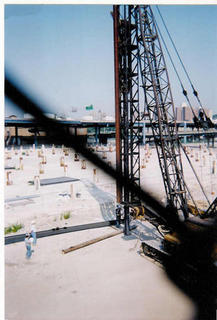
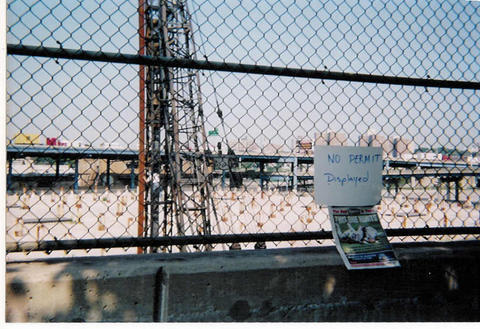
In a move that is both illegal and brazen, the Related Companies is demolishing a building at the Bronx Terminal Market and at the same time intentionally disrupting the legitimate operation of the market as a wholesale food distribution center. Related is doing this while continuing to pocket the rent money of the market wholesalers, money that is being used to destroy the existing businesses.
Under the terms of the current lease, Related's only legal role at the BTM is to continue to operate the market as set forth in the City Charter. This lease, as we have frequently pointed out, allows the inside trader to keep over three million dollars a year while turning over a paltry $250,000 a year to the City.
It needs to be strongly emphasized that the proposed plans to develop the BTM as a shopping mall have, just as with the attempted evictions of the market merchants themselves, not yet been approved. Given this obvious breach of its fiduciary responsibility it is time for Related to be enjoined by the court from illegally profiteering from the tenants rent checks.
At the same time, the court needs to restrain Related from interfering with the ongoing business at the BTM. A loading dock has been blocked, deliveries thwarted, and the entire area is being impeded by the contruction crew's personal vehicles.
Most egregious, however, is the piling of undetermined and quite possibly contaminated debris in an uncovered area. The uncovered matter has become airborne and is threatening the health and safety of the merchants, their customers and, most importantly, the community at large. Don't forget that this is a neighborhood that is plagued with asthma and respiratory ailments.
In response to this brazen illegality, the lawyers for the BTM merchants have sent a letter to the mayor, alerting him to the activities of Related, and requesting his intercession to stop this blatant attempt to violate the City Charter. Related, by its arrogant and illegal actions, has made one thing perfectly clear, particularly to the community. This is not a company that can be trusted to carry out large scale development in the South Bronx and should be removed immediately.
Once Related is removed and paid the $40 millions in blood money that it "negotiated" with the city, an open bidding process should be immediately commence. If this is done, we would soon discover, just as we did at Hudson Yards, that the BTM property is worth a heck of a lot more than the Related sleight-of-hand swindle currently provides the city with.
Here again are some pics of Related's illegal actions:


Under the terms of the current lease, Related's only legal role at the BTM is to continue to operate the market as set forth in the City Charter. This lease, as we have frequently pointed out, allows the inside trader to keep over three million dollars a year while turning over a paltry $250,000 a year to the City.
It needs to be strongly emphasized that the proposed plans to develop the BTM as a shopping mall have, just as with the attempted evictions of the market merchants themselves, not yet been approved. Given this obvious breach of its fiduciary responsibility it is time for Related to be enjoined by the court from illegally profiteering from the tenants rent checks.
At the same time, the court needs to restrain Related from interfering with the ongoing business at the BTM. A loading dock has been blocked, deliveries thwarted, and the entire area is being impeded by the contruction crew's personal vehicles.
Most egregious, however, is the piling of undetermined and quite possibly contaminated debris in an uncovered area. The uncovered matter has become airborne and is threatening the health and safety of the merchants, their customers and, most importantly, the community at large. Don't forget that this is a neighborhood that is plagued with asthma and respiratory ailments.
In response to this brazen illegality, the lawyers for the BTM merchants have sent a letter to the mayor, alerting him to the activities of Related, and requesting his intercession to stop this blatant attempt to violate the City Charter. Related, by its arrogant and illegal actions, has made one thing perfectly clear, particularly to the community. This is not a company that can be trusted to carry out large scale development in the South Bronx and should be removed immediately.
Once Related is removed and paid the $40 millions in blood money that it "negotiated" with the city, an open bidding process should be immediately commence. If this is done, we would soon discover, just as we did at Hudson Yards, that the BTM property is worth a heck of a lot more than the Related sleight-of-hand swindle currently provides the city with.
Here again are some pics of Related's illegal actions:


Thursday, September 01, 2005
Firehouse Closings
We have just gotten word from a very reliable source that there are at least 20 firehouses on the chopping block if the mayor gets re-elected. This should come as no surprise to those of us who have followed this issue and have paid attention to the Bloomberg/Shaw mindset. It is time, however, for the Democratic mayoral candidates to bring this issue front and center.
The way to do this is to reach out to the impacted communities, particularly in East Harlem and Williamsburg, and look to enlist the help of the UFA and the UFOA. An attempt should be made to get a hand on the old Dinkins "doomsday" list and use it - since no real siting studies have been done since 1975 - to inform the neighborhoods where firehouses are targeted what lies in store for them.
The inevitability of this comes from the fact that Deputy Shaw, eerily the reincarnation of one of his predecessors Norman Steisel, has made it clear that the FDNY is, "ripe for finding productivity savings..." It even goes beyond this, however. We were told a story that when the mayor went to Albany in 2003 seeking an additional $300 million in state aid he brought the dyspeptic Shaw with him.
When the mayor and Shaw met with Majority Leader Joe Bruno one of the firehouses still on the chopping block was Engine 282 in Middle Village, Queens, an area that happens to be represented by Republican Serph Maltese. When Maltese, who was at the meeting started to raise the firehouse issue, Shaw attempted to cut him off saying, "We're not here to discuss firehouses". At which point an unnamed senator started to scream at Shaw and it got so bad that the little deputy fled the room.
Of course with $300 million in play it was inevitable that the Queens company was not going to close. The story is a potent reminder, though, of the aggressively anti-FDNY mindset that animates the Bloomberg team. It seems that the normally fiscally carefree, raise the taxes mayor, becomes a prudent fiscal conservative only when it comes to NYC's Bravest. Clearly, the handwriting is on the wall for the Department in a Bloomberg second term.
The way to do this is to reach out to the impacted communities, particularly in East Harlem and Williamsburg, and look to enlist the help of the UFA and the UFOA. An attempt should be made to get a hand on the old Dinkins "doomsday" list and use it - since no real siting studies have been done since 1975 - to inform the neighborhoods where firehouses are targeted what lies in store for them.
The inevitability of this comes from the fact that Deputy Shaw, eerily the reincarnation of one of his predecessors Norman Steisel, has made it clear that the FDNY is, "ripe for finding productivity savings..." It even goes beyond this, however. We were told a story that when the mayor went to Albany in 2003 seeking an additional $300 million in state aid he brought the dyspeptic Shaw with him.
When the mayor and Shaw met with Majority Leader Joe Bruno one of the firehouses still on the chopping block was Engine 282 in Middle Village, Queens, an area that happens to be represented by Republican Serph Maltese. When Maltese, who was at the meeting started to raise the firehouse issue, Shaw attempted to cut him off saying, "We're not here to discuss firehouses". At which point an unnamed senator started to scream at Shaw and it got so bad that the little deputy fled the room.
Of course with $300 million in play it was inevitable that the Queens company was not going to close. The story is a potent reminder, though, of the aggressively anti-FDNY mindset that animates the Bloomberg team. It seems that the normally fiscally carefree, raise the taxes mayor, becomes a prudent fiscal conservative only when it comes to NYC's Bravest. Clearly, the handwriting is on the wall for the Department in a Bloomberg second term.
Tax Cuts, Poverty and Non-Working Families
The Times is reporting today on the Working Families Party's current indecision in the Democratic mayoral primary. While Bertha Lewis and Acorn has thrown its support behind Freddy the WFP remains sidelined. That did not stop Party leader Dan Cantor from taking an oblique sot at Anthony Weiner's call for tax cuts.
The thrust of Cantor's criticism was directed at the fact that we shouldn't be calling for tax cuts when one out of every five New Yorkers is living below the poverty level. This is the exact point where we part company with the WFP's philosophy. In our view you don't raise people up through government largesse, as important as temporary public aid might may be in troubled times.
Economic growth is the sine qua non of raising a society's standard of living. If there are those who need more help to become economically competitive than that is where government can play a creative and positive concomitant role. When strategies focus on government exclusively that is where the troubles begin. From a New York City standpoint the best take on this discussion is Ken Auletta's "When the Streets Were Paved With Gold", an analysis of the city's fiscal crisis in the 1970s.
It needs to be pointed out that the city's emergence from the cataclysms of the 70s, a decade marked not only by fiscal decline but by urban disorders and an arson epidemic as well, was stimulated in part by the yeoman efforts of the city's neighborhood retailers. These pioneering entrepreneurs, many of whom were new immigrants, filled the void created by fleeing national chains and redlining banks. They rebuilt stores, re-invested in the community and, most importantly, hired tens of thousand of New Yorkers.
We bring all of this out because we believe strongly that the jump in the city's poverty rate, the only major American city to experience such a rise, can be laid directly at the mayor's doorstep. It is the Bloomberg policies, the tax increases and regulatory blitzes, that have tamped down New York’s growth.
Cutting taxes and easing the city's regulatory burden is the smartest method to stimulate the kind of economic growth that will bring more low income New Yorkers off of dependency and onto the tax rolls. After all the 100,000 city residents who are employed by New York bodegas are the kind of folks who are getting their first leg up on the economic ladder. The words of legendary bodega pioneer Johnny Torres are still true today: "The best form of welfare is to give someone a job".
The thrust of Cantor's criticism was directed at the fact that we shouldn't be calling for tax cuts when one out of every five New Yorkers is living below the poverty level. This is the exact point where we part company with the WFP's philosophy. In our view you don't raise people up through government largesse, as important as temporary public aid might may be in troubled times.
Economic growth is the sine qua non of raising a society's standard of living. If there are those who need more help to become economically competitive than that is where government can play a creative and positive concomitant role. When strategies focus on government exclusively that is where the troubles begin. From a New York City standpoint the best take on this discussion is Ken Auletta's "When the Streets Were Paved With Gold", an analysis of the city's fiscal crisis in the 1970s.
It needs to be pointed out that the city's emergence from the cataclysms of the 70s, a decade marked not only by fiscal decline but by urban disorders and an arson epidemic as well, was stimulated in part by the yeoman efforts of the city's neighborhood retailers. These pioneering entrepreneurs, many of whom were new immigrants, filled the void created by fleeing national chains and redlining banks. They rebuilt stores, re-invested in the community and, most importantly, hired tens of thousand of New Yorkers.
We bring all of this out because we believe strongly that the jump in the city's poverty rate, the only major American city to experience such a rise, can be laid directly at the mayor's doorstep. It is the Bloomberg policies, the tax increases and regulatory blitzes, that have tamped down New York’s growth.
Cutting taxes and easing the city's regulatory burden is the smartest method to stimulate the kind of economic growth that will bring more low income New Yorkers off of dependency and onto the tax rolls. After all the 100,000 city residents who are employed by New York bodegas are the kind of folks who are getting their first leg up on the economic ladder. The words of legendary bodega pioneer Johnny Torres are still true today: "The best form of welfare is to give someone a job".
Wednesday, August 31, 2005
Wal-Mart’s Urban Image
According to Reuters:
Seriously, this is yet another crafty move by Wal-Mart to gain exposure in the various urban communities that it wants to enter or expand in. Despite its previously documented problems with race discrimination, the mega-retailer believes that by sponsoring film festivals, scholarships and other minority-targeted programs it has a better chance of breaching places like New York City.
And according to a new treacly Time magazine article the strategy is partially working in Chicago:
However, it remains to be seen whether the same success will be duplicated here in New York City. We have pointed out that Wal-Mart’s best shot in the 5 boroughs would be in a lower-income minority neighborhood but, unlike Chicago, a number of black and Hispanic elected officials here are against the store and there is less racial tension between minority New Yorkers and the labor movement.
Cable channel BET and Wal-Mart announced a marketing alliance Tuesday that will provide Wal-Mart and Sam's Club stores with exclusive companion DVDs that contain BET programming and content related to urban-oriented music and movie releases.After hearing this we're now waiting for Wal-Mart to team up with Jay-Z for a "I've got 99 problems but low prices ain't one" campaign.
The DVDs will be packaged with the music and movie releases and sold as "BET Official" branded two-packs in BET-branded retail sections and at other merchandising displays throughout thousands of Wal-Mart and Sam's Club locations nationwide.
Seriously, this is yet another crafty move by Wal-Mart to gain exposure in the various urban communities that it wants to enter or expand in. Despite its previously documented problems with race discrimination, the mega-retailer believes that by sponsoring film festivals, scholarships and other minority-targeted programs it has a better chance of breaching places like New York City.
And according to a new treacly Time magazine article the strategy is partially working in Chicago:
In the past decade, the world's biggest retailer has been portrayed as a brutal giant, accused of wiping out small businesses, union busting, discrimination against female employees, employing illegal immigrants--not to mention the knock, vehemently disputed by the company, of being a low payer. But recently one of America's most embattled corporations has found an ally in one of America's most embattled demographics. No longer content to let its profits do the talking, Wal-Mart is trying to remake its image, in some measure with the aid of inner-city African Americans. The math is simple: Wal-Mart offers stores and jobs to poor black communities that are hemorrhaging both. Meanwhile, those communities extol the virtues of Wal-Mart, offering a buffer against the company's critics.For a good critique of this piece check out JR on Daily Kos.
However, it remains to be seen whether the same success will be duplicated here in New York City. We have pointed out that Wal-Mart’s best shot in the 5 boroughs would be in a lower-income minority neighborhood but, unlike Chicago, a number of black and Hispanic elected officials here are against the store and there is less racial tension between minority New Yorkers and the labor movement.
Wal-Mart Wants to Monopolize Monopolization
Wal-Mart CEO Lee Scott is not too fond when other companies steal Wal-Mart’s business model of attempted monopolization. In fact, he recently complained that Tesco, Wal-Mart’s British supermarket rival, has too high a market share at 30.5% and that the British government should investigate. The irony is that, in the United States, Wal-Mart’s share of the grocery market may reach that percentage or higher, according to certain analysts. As Rich Smith, of the Motley Fool points out:
Dueling surveys aside, there's a bigger issue to consider here: corporate hypocrisy. Wal-Mart is, after all, the world's biggest retailer, with all the pricing power and market-dominating potential that such a title implies. The company's annual turnover exceeds most nations' GDPs. In the grocery segment, Merrill Lynch(NYSE: MER) put Wal-Mart's U.S. market share at 15% in 2003, and at least one research report argues that the company is on track to control a 35% share of the U.S. grocery market by 2007. Yet here it is, whining that it's a helpless, hapless victim of big, bad Tesco?It seems that even when it comes to monopolization, Wal-Mart isn't too fond of competition.
Wal-Mart, Health Care and the NY Post
Mary Campbell Gallagher, of BigCitiesBigBoxes, trenchantly responds to the New York Post’s editorial on Wal-Mart that we dissected on Monday. As Gallagher points out:
But wait. The Post also thinks New York's taxpayers can afford to subsidize Wal-Mart. "New York," the Post says, "leads the nation in Medicaid spending, at $45 billion a year. Supposedly impoverished Wal-Mart staff would never make up even a hint of a speck of a drop in New York's Medicaid bucket." So now the Post is trivializing New Yorkers' tax bills. Leaving aside the fact that Medicaid is only one form of public assistance, does the Post really think that cheaper groceries are more important than lower taxes? Was that supposed to be what the Post was arguing? I thought it started out to say that the unions' claims were false. Apparently not.Read the whole thing.
NY Daily News Needs Public Editor
We have already published our comments on the Daily News story that focuses attention on Mayor Bloomberg's economic policies. As we pointed out the story's headline about "mixed messages" inhered to the column alone. The story itself was exclusively laudatory and failed to even point out a single negative aspect of the mayor's approach to policy making in this area.
Exacerbating this omission was the story's failure to even mention small business. We do know, however, that the reporter interviewed a number of representatives from the small business community. So what's going on down on 33rd Street?
The News has been running a series on the mayor's record in office as he runs for re-election. The paper's latest missive is about schools and it reads quite frankly as if it emerged fully grown from the mayor's political womb. The same can be said about the other so-called stories.
What is particularly egregious about this thinly masked electioneering in the guise of news is that it is clearly help that the mayor doesn't need. He has already spent over $10 million in TV advertising and a bundle more on radio ads and glossy targeted mailings. All of this free spending is reflected in the mayor's poll standings which show that the mayor would probably win a Democratic primary without a run-off.
All of which should give the editors at the News a desire for a greater degree of fairness not less. The economy is, in fact, a major weakness in the record of the Bloomberg administration. If the comments we made to their reporter had been allowed to see the light of day they would have reflected the grave dissatisfaction among small business owners with the mayor's policies.
In addition, how do you talk about the city's economy without any discussion of tax and regulatory policies which surveys recognize as the main variable in all economic growth but particularly for the productivity small businesses?
In addition, a report was issued yesterday that cited NYC as the only major city to experience a growth in its poverty rate. This dovetails nicely with Wayne Barrett's piece on Freddy Ferrer in this week's Village Voice. Barrett talks about the issue of structural poverty and how it's not getting the attention it deserves in this campaign.
What should we expect? The Bloomberg economic development folks are cruising along on $1 a year. All their plans involve mega-projects that displace smaller firms. The biggest fraud in the mayor's own commercials is the one where he is shown standing in front of a neighborhood store. As we have continually pointed out before this administration is easily the most anti-small business in the last thirty years.
Maybe its time for the News to adopt the Times' approach and hire a public editor. If they did we might be able to witness more balance and not see the kind of abject toadying during an election cycle that we are being bombarded with this week.
Exacerbating this omission was the story's failure to even mention small business. We do know, however, that the reporter interviewed a number of representatives from the small business community. So what's going on down on 33rd Street?
The News has been running a series on the mayor's record in office as he runs for re-election. The paper's latest missive is about schools and it reads quite frankly as if it emerged fully grown from the mayor's political womb. The same can be said about the other so-called stories.
What is particularly egregious about this thinly masked electioneering in the guise of news is that it is clearly help that the mayor doesn't need. He has already spent over $10 million in TV advertising and a bundle more on radio ads and glossy targeted mailings. All of this free spending is reflected in the mayor's poll standings which show that the mayor would probably win a Democratic primary without a run-off.
All of which should give the editors at the News a desire for a greater degree of fairness not less. The economy is, in fact, a major weakness in the record of the Bloomberg administration. If the comments we made to their reporter had been allowed to see the light of day they would have reflected the grave dissatisfaction among small business owners with the mayor's policies.
In addition, how do you talk about the city's economy without any discussion of tax and regulatory policies which surveys recognize as the main variable in all economic growth but particularly for the productivity small businesses?
In addition, a report was issued yesterday that cited NYC as the only major city to experience a growth in its poverty rate. This dovetails nicely with Wayne Barrett's piece on Freddy Ferrer in this week's Village Voice. Barrett talks about the issue of structural poverty and how it's not getting the attention it deserves in this campaign.
What should we expect? The Bloomberg economic development folks are cruising along on $1 a year. All their plans involve mega-projects that displace smaller firms. The biggest fraud in the mayor's own commercials is the one where he is shown standing in front of a neighborhood store. As we have continually pointed out before this administration is easily the most anti-small business in the last thirty years.
Maybe its time for the News to adopt the Times' approach and hire a public editor. If they did we might be able to witness more balance and not see the kind of abject toadying during an election cycle that we are being bombarded with this week.
Tuesday, August 30, 2005
Doctoroff and the NYC Conflict of Interests Board
The entire mess at the BTM and the role played by Deputy Dan would seem to compel a reevaluation of the original ruling by the NYC Conflict of Interest Board (COIB), the one that told Doctoroff that Steve Ross' assumption of his $4 million loan to NYC 2012 didn't constitute a conflict because:
In the first place, the Board failed to adequately evaluate the Deputy Mayor's ongoing relationship and commitment to NYC 2012; indeed the Committee continued to list Doctoroff as its founder on all of its communications, even after he had entered into public service. In addition, the Board itself recognized that Ross was "one of the most active members and fundraisers for NYC2012," a role he continued to play well into the Bloomberg mayoralty.
It should also be pointed out, as everyone would now acknowledge, that the goal of obtaining the Olympic bid was a primary economic development objective of the administration. As such, Doctoroff's relationship with Ross, or better yet, using the Board's term - his "association" (That sounds just like the Giuliani-inspired mob busting carting regulations) - must be viewed as ongoing and not "predating".
If it is, than it is incumbent on the COIB to re-examine its original ruling. The ruling clearly stated that its "no conflict" determination was based on Docoroff's own "representations." Even if it were given only the publicly disclosed information that is currently available, the Board has enough data to find that an ongoing conflict exists. Compounding the seriousness of the situation is that Doctoroff, after the Board's finding, had voluntarily announced he would recuse himself from dealings with Mr. Ross and Related, another representation that cannot hold up to even minimal scrutiny.
That this is true can be clearly gleaned from a look at the machinations surrounding the immaculate deception at the Bronx Terminal Market. The key issue here is the FOILed document showing that the city had already earmarked the BTM site for the Olympic Velodrome in 2002, a full year before the Related lease deal for the market was finalized (And right in the middle of the COIB's inquiry). The Terminal Market was targeted, and Related was engaged, precisely because of its envisioned role as an Olympic venue.
As Jesse Masyr, Related's own attorney points out in the Tom Robbins story of April, 13, 2004, "Deputy Mayor Doctoroff did reach out to Related in 2002 for their development thoughts on the market." Of course he would, they were still on the same team. It is also exactly why Related, despite some fluctuating misinformation emanating out of City Hall and EDC, was given the exclusive option to wheel and deal with the Buntzmans at the BTM.
Mr. Ross' guarantee predates your city service [which it did by four days] and inasmuch as you do not, by virtue of his guarantee, have a business or financial relationship with Mr. Ross...The last four years exposes this ruling as a sham.
In the first place, the Board failed to adequately evaluate the Deputy Mayor's ongoing relationship and commitment to NYC 2012; indeed the Committee continued to list Doctoroff as its founder on all of its communications, even after he had entered into public service. In addition, the Board itself recognized that Ross was "one of the most active members and fundraisers for NYC2012," a role he continued to play well into the Bloomberg mayoralty.
It should also be pointed out, as everyone would now acknowledge, that the goal of obtaining the Olympic bid was a primary economic development objective of the administration. As such, Doctoroff's relationship with Ross, or better yet, using the Board's term - his "association" (That sounds just like the Giuliani-inspired mob busting carting regulations) - must be viewed as ongoing and not "predating".
If it is, than it is incumbent on the COIB to re-examine its original ruling. The ruling clearly stated that its "no conflict" determination was based on Docoroff's own "representations." Even if it were given only the publicly disclosed information that is currently available, the Board has enough data to find that an ongoing conflict exists. Compounding the seriousness of the situation is that Doctoroff, after the Board's finding, had voluntarily announced he would recuse himself from dealings with Mr. Ross and Related, another representation that cannot hold up to even minimal scrutiny.
That this is true can be clearly gleaned from a look at the machinations surrounding the immaculate deception at the Bronx Terminal Market. The key issue here is the FOILed document showing that the city had already earmarked the BTM site for the Olympic Velodrome in 2002, a full year before the Related lease deal for the market was finalized (And right in the middle of the COIB's inquiry). The Terminal Market was targeted, and Related was engaged, precisely because of its envisioned role as an Olympic venue.
As Jesse Masyr, Related's own attorney points out in the Tom Robbins story of April, 13, 2004, "Deputy Mayor Doctoroff did reach out to Related in 2002 for their development thoughts on the market." Of course he would, they were still on the same team. It is also exactly why Related, despite some fluctuating misinformation emanating out of City Hall and EDC, was given the exclusive option to wheel and deal with the Buntzmans at the BTM.
Gotbaum and Eminent Domain
In a column that once again demonstrates how difficult it is to remain ideologically consistent about the issue of eminent domain, Robert George takes Public Advocate Betsy Gotbaum to task for her support of Atlantic Yards. It seems that Gotbaum, in her public statements as well as in the debates, has taken an absolute position in opposition to the use of eminent domain.
All of which creates an obvious problem for her support of The FCRC project in Brooklyn. There are a number of interesting observations here. First is the alliance of the conservative George with the liberal Norman Siegel and Tish James. Secondly, the Gotbaum conundrum points to the dangers of taking an absolute "no way' position.
Is the taking of private property for anything but an obvious public use out-of-bounds? If not, are there policy guidelines that can be creatively crafted to allow the use of ED in certain circumstances? This is definitely the starting point for a spirited public debate. Our position, in support of the Atlantic Yards project, can be defended on a number of sound public interest rationales. The use of ED, however, does create complications. We do look forward to the upcoming debate around this issue and we're certainly not going to shy away from the conflicts it will generate.
All of which creates an obvious problem for her support of The FCRC project in Brooklyn. There are a number of interesting observations here. First is the alliance of the conservative George with the liberal Norman Siegel and Tish James. Secondly, the Gotbaum conundrum points to the dangers of taking an absolute "no way' position.
Is the taking of private property for anything but an obvious public use out-of-bounds? If not, are there policy guidelines that can be creatively crafted to allow the use of ED in certain circumstances? This is definitely the starting point for a spirited public debate. Our position, in support of the Atlantic Yards project, can be defended on a number of sound public interest rationales. The use of ED, however, does create complications. We do look forward to the upcoming debate around this issue and we're certainly not going to shy away from the conflicts it will generate.
BTM Deal: Blame Freddy?
In yesterday's NY Times Charles Bagli and Robin Shulman focus on the Bronx Terminal Market development and place some blame on Freddy Ferrer for not being more vocal in his opposition to the "sweetheart" nature of the deal. While we would agree that the whole stinking mess could benefit from some stingent criticism from the Democrats' leading mayoral candidiate it is fair to say that the entire piece is no more than a sidebar to the main story: the machinations of Deputy Mayor Doctoroff on behalf of his good friend Steve Ross.
Our definite impression in talking with the Times is that the paper has by no means finished with this unseemly topic. They are going to spend a great deal of time and attention on the deal itself and, hopefully, lay some serious blame on the real culprits: Bloomberg, Doctoroff, Ross and Buntzman. When they do, it will create the appropriate context for their criticism of Ferrer, someone who is no more than a bystander to the mayor's ten car pile-up off the Major Deegan at the BTM.
Our definite impression in talking with the Times is that the paper has by no means finished with this unseemly topic. They are going to spend a great deal of time and attention on the deal itself and, hopefully, lay some serious blame on the real culprits: Bloomberg, Doctoroff, Ross and Buntzman. When they do, it will create the appropriate context for their criticism of Ferrer, someone who is no more than a bystander to the mayor's ten car pile-up off the Major Deegan at the BTM.
Monday, August 29, 2005
Evaluating the Mayor’s Economic Development Policies
In today’s Daily News, Dave Saltonstall examines Mayor Bloomberg’s economic development policies and, in general, gives the mayor high marks even though the story’s headline, “Message is Mixed,” promises a more critical evaluation. Clearly, a significant portion of the story got left out, probably because of space requirements.
At least we hope so since the mayor’s economic development record, particularly when it comes to small business, leaves a great deal to be desired. As we have mentioned previously, you simply cannot talk about this subject without analyzing municipal tax and regulatory policies. It is these areas that play the most significant role in either generating new economic activity or frustrating growth.
The mayor’s record tax increases, and his scorched earth regulation policies, have had a tremendously negative impact on the city’s small business community. More specifically, when economic development projects are planned there is an almost complete lack of concern for the small businesses that may be displaced or simply put out of businesses.
The BTM merchants are, of course, prime examples of this generalized callousness, a disregard that was baldly expressed by an infamous EDC missive to the merchants’ lawyers. That is not all, however. The great street furniture project dispossesses scores of small newsstand operators while turning the entire ball of wax over to one mega-vendor.
Upcoming is the battle over Willets Point where the mayor’s observation that “the land is too valuable for the businesses that are on it” should be seen as an apt expression of his economic development policies vis-à-vis small business.
Hopefully, the campaign ahead will tackle these very important issues. The mayor must be called on his disingenuous commercials, particularly the one showing him in front of a neighborhood store claiming that his policies are somehow geared to help those beleaguered storeowners when the exact opposite is the case.
At least we hope so since the mayor’s economic development record, particularly when it comes to small business, leaves a great deal to be desired. As we have mentioned previously, you simply cannot talk about this subject without analyzing municipal tax and regulatory policies. It is these areas that play the most significant role in either generating new economic activity or frustrating growth.
The mayor’s record tax increases, and his scorched earth regulation policies, have had a tremendously negative impact on the city’s small business community. More specifically, when economic development projects are planned there is an almost complete lack of concern for the small businesses that may be displaced or simply put out of businesses.
The BTM merchants are, of course, prime examples of this generalized callousness, a disregard that was baldly expressed by an infamous EDC missive to the merchants’ lawyers. That is not all, however. The great street furniture project dispossesses scores of small newsstand operators while turning the entire ball of wax over to one mega-vendor.
Upcoming is the battle over Willets Point where the mayor’s observation that “the land is too valuable for the businesses that are on it” should be seen as an apt expression of his economic development policies vis-à-vis small business.
Hopefully, the campaign ahead will tackle these very important issues. The mayor must be called on his disingenuous commercials, particularly the one showing him in front of a neighborhood store claiming that his policies are somehow geared to help those beleaguered storeowners when the exact opposite is the case.
Ex Post Factless
The New York Post ran an editorial yesterday blasting the Health Care Security act as well as the general notion that Wal-Mart burdens the public health care system. According to the paper:
The paper’s opinion piece also assumes those concerned about Wal-Mart’s impact on safety net programs are solely union members using “labor-friendly” data. The first part of the claim is ridiculous; there are a whole consortium of groups and individuals country-wide (including Republican lawmakers like City Councilman Jimmy Oddo) who have expressed concern about Wal-Mart’s burden on taxpayers. As for the assertion that data demonstrating Wal-Mart’s drain is completely biased how does the Post explain the various newspapers who have reported on the disproportionate number of Wal-Mart associates utilizing state medicare programs? Does it consider the Atlanta Journal and Constitution to be a “labor-friendly” source? How about the Wall Street Journal which reported in 2003:
What about that argument about workers' onerous Medicaid costs?A couple of things need to be pointed out. It’s supremely hypocritical for the editorialist to critique the “biased” data source used by those in the anti-Wal-Mart camp when he, in the previous sentence, uses information provided by Wal-Mart. In fact, the Post’s "spouse or parent" claim is an almost exact replica of a 2004 statement made by Bentonville-based spokesman Dan Fogelman:
Well, it's true that only a bit more than half of Wal-Mart's workers take the company's health insurance.
But for many of those who don't, the reason is that they've already got coverage.
In all, about 80 percent of Wal-Mart's workers have some kind of insurance — either through Wal-Mart or, say, a spouse or parent.
As for any Wal-Mart workers on public assistance, the figures the unions use come exclusively from labor-friendly sources (like the staffers of pro-union House Democrats) and are completely unreliable.
But Fogleman said the total of employees with health insurance is 90 percent, because many get coverage through a spouse, a parent or a government program such as Medicare.But wait, the editorial forgot to mention that the 80-90% claim made by Wal-Mart includes those on the public dole. Though these workers are technically covered, this fact directly contradicts the Post’s claim that the great majority of Wal-Mart workers are not being subsidized by taxpayers. Maybe the Post needs to look at its own bias to figure out how it glossed over an important piece of evidence.
The paper’s opinion piece also assumes those concerned about Wal-Mart’s impact on safety net programs are solely union members using “labor-friendly” data. The first part of the claim is ridiculous; there are a whole consortium of groups and individuals country-wide (including Republican lawmakers like City Councilman Jimmy Oddo) who have expressed concern about Wal-Mart’s burden on taxpayers. As for the assertion that data demonstrating Wal-Mart’s drain is completely biased how does the Post explain the various newspapers who have reported on the disproportionate number of Wal-Mart associates utilizing state medicare programs? Does it consider the Atlanta Journal and Constitution to be a “labor-friendly” source? How about the Wall Street Journal which reported in 2003:
Last year, average spending on health benefits for each of the company's roughly 500,000 covered employees was $3,500, almost 40% less than the average for all U.S. corporations and 30% less than the rest of the wholesale/retail industry, according to estimates by Mercer Human Resource Consulting, a unit of Marsh & McLennan Co."We suggest that instead of misrepresenting quotes and making baseless attacks, the Post should look at the data showing Wal-Mart’s exploitation of tax-payer funded programs. Considering that the paper so often editorializes against government waste and high taxes, maybe it should critically examine how the big box from Bentonville contributes to these undesirable conditions.
Subscribe to:
Posts (Atom)